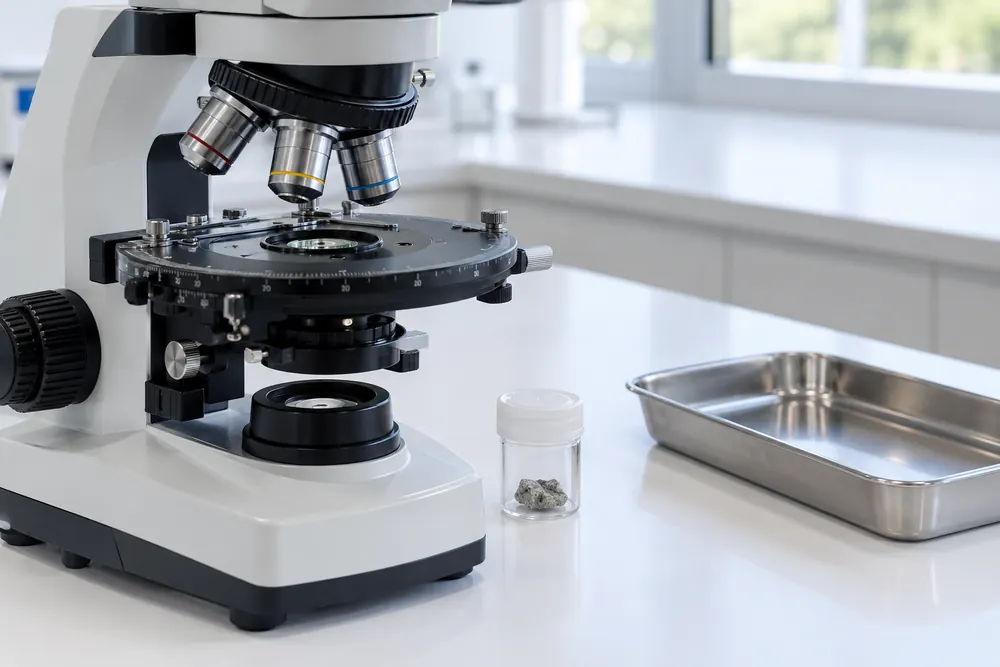
Define The Job Before It Starts
Professional sampling and accredited bulk material analysis. This service supports our wider asbestos removal Glasgow work for business premises. See our commercial coverage or send a site enquiry with the information you already hold.
When Material Testing Helps
Testing can resolve a defined uncertainty in an existing register or support an inspection before a limited maintenance task. It can also identify whether apparently similar materials are actually different products. For example, a replacement ceiling panel may not be the same as the surrounding original installation.
Send a description of the material and where it sits, together with the task being proposed. A photograph can help plan an inspection but cannot confirm the presence or absence of asbestos fibres. Keep suspect material intact until a competent person has assessed how it should be sampled.
Controlled Sampling And Traceability
Sampling must avoid unnecessary disturbance and prevent contamination of surrounding surfaces. It should be carried out by a suitably trained person with the appropriate controls, equipment and arrangements for the sampled location. We do not ask building users to scrape coatings, break sheets or send loose fragments through ordinary post.
Each sample needs a unique reference tied to a room, component and position. The sampling record should distinguish the precise tested item from other materials nearby. If several layers or finishes are present, the sampling plan must address them rather than assuming a surface test describes the whole construction.
Laboratory Analysis And HSE Guidance
Bulk analysis identifies asbestos in a material sample. HSE requires trained, competent and accredited analysts for material analysis, and HSG248 describes the analytical approach. Check the laboratory’s current UKAS accreditation and scope for the particular analysis being commissioned.
A laboratory certificate should identify the sample and result clearly enough to link back to your premises. Keep the sampling record alongside it. Laboratory accreditation is a property of the appointed laboratory, not a claim that every business arranging an enquiry holds its own testing accreditation.
Understanding The Result And Its Limits
A positive result confirms asbestos in the sampled material, but does not by itself decide whether removal is needed or whether work is licensable. Those decisions depend on condition, disturbance, planned methods and exposure risk. Sound material may be managed if it can remain protected.
A negative result relates to the sample and the material it represents. It cannot clear untested boards, concealed layers or a whole floor without a suitable inspection strategy. Where a fit-out will open walls, floors or ceilings, a refurbishment survey is usually the more useful starting point.
Material Testing Is Different From Air Monitoring
A bulk material test asks whether a solid sample contains asbestos. Air monitoring addresses airborne fibre concentrations under a defined method and sampling plan. These are different services with different interpretations, so a result from one cannot casually stand in for the other.
Tell us if the concern follows accidental damage, dust release or completed removal. That context may require a wider assessment and analytical support rather than a single sample. Keep people out of the affected area until a competent assessment establishes the appropriate next steps.
How The Work Is Organised
- Describe The Question
Explain the suspect material, location and planned work. Share existing sample references to avoid confusion.
- Arrange Safe Sampling
Agree site access, local isolation and the limits of the sampling visit with a competent person.
- Analyse The Sample
Use an appropriately accredited laboratory and retain a traceable chain from the site reference to the certificate.
- Apply The Findings
Review what the result covers, update relevant records and commission any wider survey or removal assessment needed.
What Affects The Cost?
Testing costs vary with the number and type of samples, the sampling visit, access conditions and laboratory turnaround requested. A price for analysis alone may exclude attendance, safe access and interpreting the result in its building context. Ask for these items to be distinguished in the quotation.
Explain any programme pressure before booking, but do not start intrusive work while waiting for a result. If numerous uncertain materials are involved, a planned survey can offer a better basis for the project than a series of disconnected tests.
Asbestos Testing Questions
Can Asbestos Be Identified From A Photograph?
Asbestos cannot be confirmed from a photograph. Some asbestos-containing materials resemble products that contain no asbestos, and surface finishes can hide different layers. A competent assessment and, where appropriate, controlled sampling with laboratory analysis are needed.
Photos remain useful for explaining the location and planning safe access without disturbing the item.
Does A Negative Sample Clear The Whole Building?
A negative asbestos sample only informs the material represented by that sample. It does not establish that unrelated rooms, concealed layers or other components contain no asbestos. Keep the sample reference and location record together, and commission a survey with a scope that matches any wider building work before relying on the result.
Technical references: HSE: Sampling And Analysis · HSE: HSG248.